Community Health Workers (CHWs) are trusted, culturally grounded professionals who improve health outcomes by meeting people where they are: at home, in clinics, and throughout their communities. In Minnesota, CHWs bridge gaps in care by providing health education, navigation, advocacy, and support that reflects the lived experiences of the people they serve. Their work leads to earlier access to care, improved management of chronic conditions, reduced health disparities, and stronger connections between communities and the health system. As frontline leaders, CHWs bring community voices into decision‑making and drive solutions that make our health system more equitable, responsive, and effective.
The Minnesota Community Health Worker Alliance is working closely with the Minnesota Department of Health and a variety of stakeholders to create a comprehensive CHW Measurement System so that we can truly understand the impact of this amazing workforce. Please see the Minnesota Statewide Measurement Plan for more information:
Findings from the 2025 CHw and employer surveys in Minnesota
The Statewide CHW Survey and CHW Employer Survey provide a snapshot of the CHW workforce and employer landscape across Minnesota. The surveys were built on nationally recognized CHW-CRE (CHW Center for Research and Evaluation) Common Indicators, with Minnesota-specific adaptations to reflect local workforce and policy needs. Together, they help fill important data gaps and provide a shared foundation for understanding workforce trends, strengthening CHW programs, and informing future policy and investment decisions across the state.
Survey Results:
The Statewide CHW Survey was distributed from September through November 2025 using a coordinated, multi-channel approach. Outreach included email campaigns from MNCHWA and MDH, presentations at CHW Circles and Learning Circles, newsletter features, and promotion at events such as the Many Faces Conference and Rural CHW Conference. The Employer Survey, launched in early October, was shared through these same channels and was also shared during the Supervisor Roundtable.
CHW Survey: 101 Responses
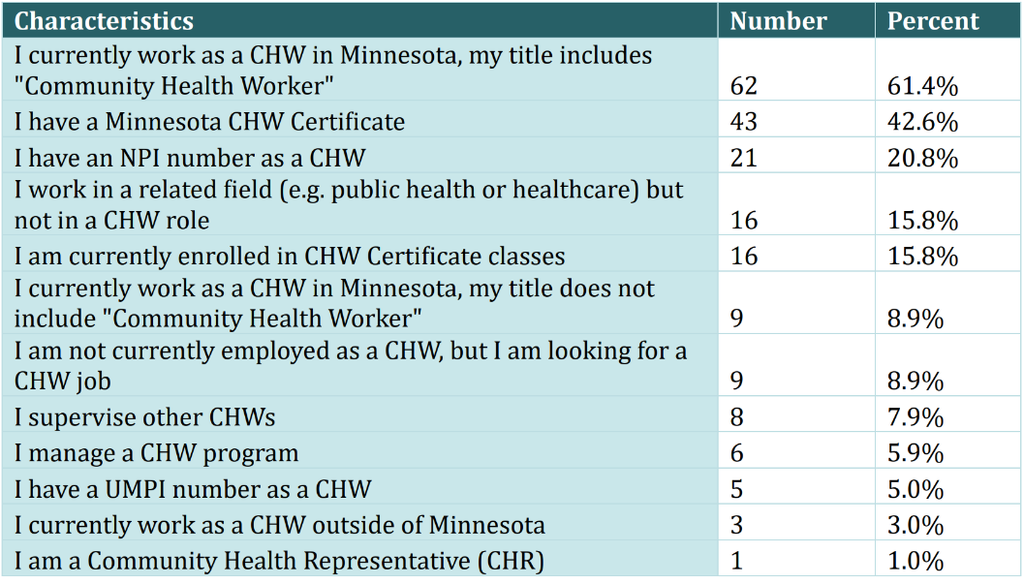
Our CHW survey included anyone who self-identifies as a CHW in Minnesota, and we wanted to know whether or not respondents’ title includes ‘community health worker’, if the respondent has a CHW Certificate and other ways that CHWs may identify themselves. We asked respondents to ‘check all that apply’ on the following categories:
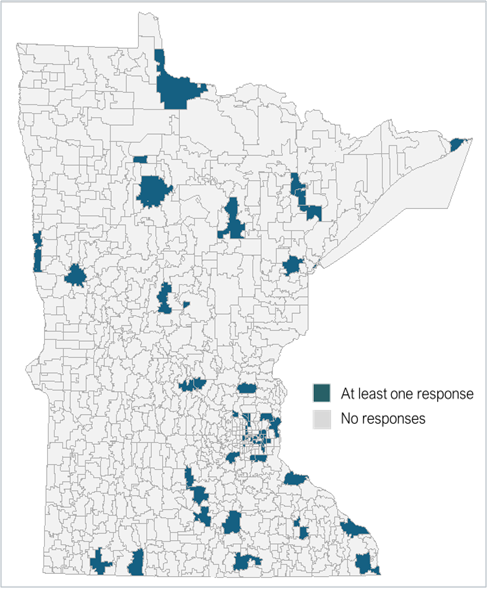
We want to ensure that we are capturing CHWs from all over the state in rural, suburban and urban settings. About half of CHW Survey respondents were from inside the seven-county metro area, and about half were from outside the metro.
Map of Zip Codes with CHW Respondents (n=98)
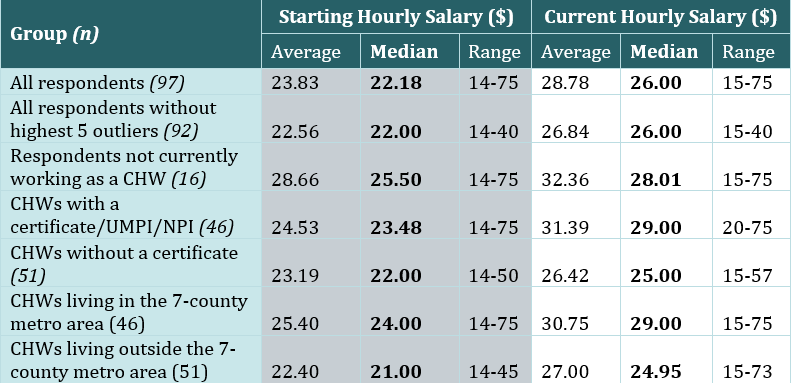
One of the most common questions we get from CHWs is about pay. The table below shows self-reported hourly wages from CHW respondents:
Employer Survey: 35 Responses
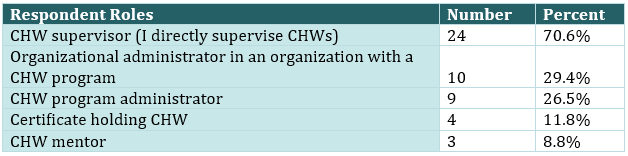
The CHW Employer Survey also gives us powerful information about the state of the CHW workforce in Minnesota. Our CHW Employer Survey included supervisors, program administrators and CHWs:
Respondent Roles (n=34)
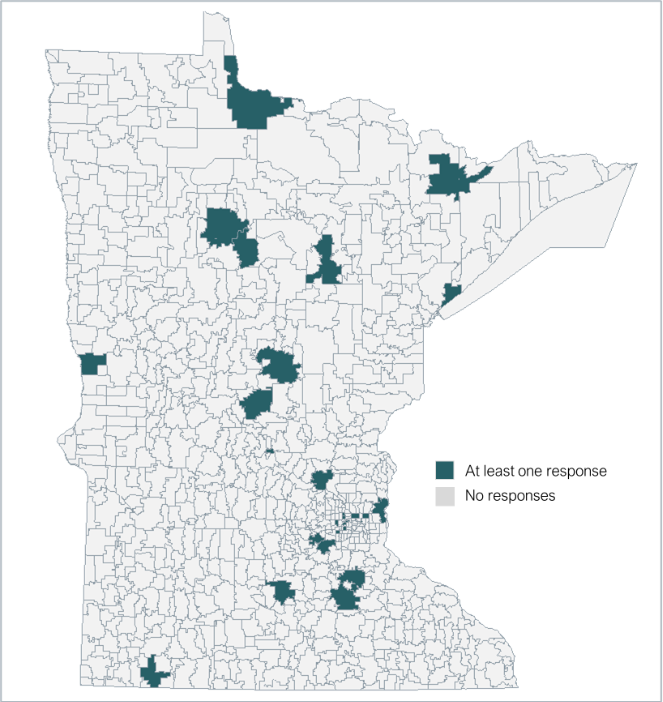
Map of Zip Codes with a CHW Employer Respondent (n=34)
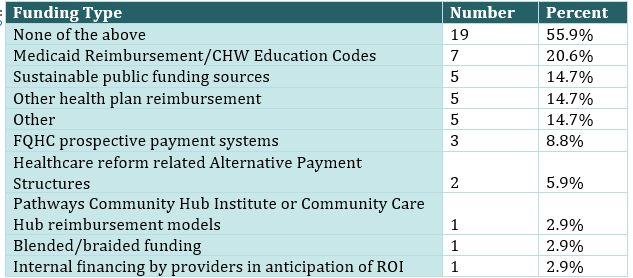
One of the questions we get the most is how to fund a CHW Program sustainably. In the CHW Employer Survey, we asked employers what type of sustainable funding their programs use. Over half of respondents do not have any source of sustainable funding:
CHW and Employer Survey Recommendations:
Employers
- Establish clear CHW career pathways
- Ensure thriving wages for CHWs & CHW supervisors
- Utilize collaborative data collection methods and systems
CHW Employers, Policy Makers and MNCHWA
- Establish clear CHW career pathways
- Ensure thriving wages for CHWs & CHW supervisors
- Utilize collaborative data collection methods and systems
MNCHWA
- Work with policymakers to launch a CHW statewide council
- Conduct regular, comprehensive workforce assessments
2026 Demonstration projects
MNCHWA supported three CHW demonstration projects through grants funded by the Minnesota Department of Health through the Community Health Worker Grant. Grantees were from across Minnesota and were supported by MNCHWA through grant monitoring, cohort learning, individualized technical assistance and coordination with an external evaluator. Grantees comprised of one evidence-based care-navigation model in a health system, one culturally grounded education and navigation delivered through a community organization, and one community-led program serving Tribal communities through a Tribal Health System. Together, the projects documented how CHWs connect residents with health and social services, provide culturally responsive education and navigation, build trust, and assist care teams in addressing health-related needs. Findings also highlighted the importance of strong partnerships, training, supervision, documentation, data capacity, coordination and evaluation resources. Lessons learned from implementation and outcomes were shared with MDH and other stakeholders to inform future CHW funding, policy and program design.
Funding Acknowledgement: These Demonstration Projects were supported by funding from the Minnesota Department of Health through the Community Health Worker Grant to expand and strengthen the community health worker workforce across Minnesota, as authorized under Minnesota Statute 144.1462.
CHW Registry Data
The Community Health Worker (CHW) Registry is a voluntary, statewide system designed to recognize and support CHWs in Minnesota by documenting their training, experience, and role in advancing health equity. It serves as a tool to better understand the CHW workforce, promote standardized competencies, and strengthen integration of CHWs into care teams. By increasing visibility and credibility of the profession, the registry helps expand opportunities for CHWs while improving access to culturally responsive care for communities across the state. In order for the CHW Registry to be valuable, CHWs have to participate. If you are a CHW, consider joining the Registry today, or updating your profile.
Geography:
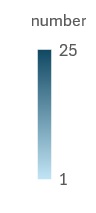
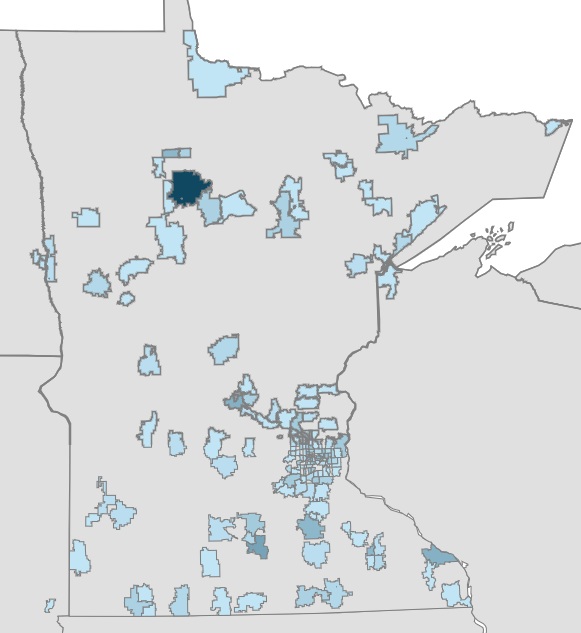
CHWs participate in the CHW registry from areas all across Minnesota and beyond. This map is a representation of CHW’s self-reported home zip code. Those that are outside Minnesota are working as CHWs in Minnesota. The color shows the number of CHWs in the Registry who have identified in that specific zip code.
CHW Model Implementation:
- IMPACT Model
- Recapping Essentia’s media coverage in November — rural health day steals the spotlight | Essentia Health
- Essentia Health’s Paul Sweere named as MHA’s Community Health Worker of the Year – Detroit Lakes Tribune | News, weather, sports from Detroit Lakes, Minnesota
- Community health workers build relationships while supporting patients | Essentia Health
- Essentia Health adds community health worker to connect Iron Range patients with needed resources | Essentia Health
- HUB Model
CHW Impact Videos:
Scholarly Articles on Chw impact:
- Effects of a Standardized Community Health Worker Intervention on Health Care Utilization Within an Integrated Delivery System 2025
- A Social Network Lens to Community Health Worker Influence and Impact 2025
- “Community health workers bring value and deserve to be valued too:” Key considerations in improving CHW career advancement opportunities 2023
- Impact of Community Health Workers on Access to Care for Rural Populations in the United States: A Systematic Review 2021
Have a CHW Impact Story to Share?
Complete this form to share a story of CHW Impact!
Partnering with the minnesota department of health for the full picture
MNCHWA is partnering closely with the Minnesota Department of Health to get the full picture of the CHW workforce and our impact on individuals and communities. For more information on CHW workforce and impact, visit https://www.health.mn.gov/communities/commhealthworkers/impact.html